
Every summer, a town in the Périgord region is decked out in paper flowers, welcomes musicians, and brings to life words that we sometimes think have disappeared. The Félibrée is a major Occitan folk festival, but it is also an event organized by residents, local organizations, and volunteers. To understand what it celebrates, we must take a look at its history, the diversity of the Périgord dialects, and the ways in which the language continues to be passed down.

1. A festival that originated from the Félibré movement in Périgord
The starting point is the association Lo Bornat from the Périgord — “La Ruche du Périgord” — founded in 1901. This Félibré school sought to keep the Occitan language and the region’s cultural traditions alive through literature, gatherings, and public events. The name of the festival, Félibrée or Felibrejada, is related to the word Félibre, which refers to a member of the Félibrige movement.
The first Félibrée organized by the Bournat took place on September 20, 1903, in Mareuil-sur-Belle. Camille Chabaneau, a linguist and majoral of the Félibrige, presided over the event. Accounts of that day recall the heated debates of the time regarding the role of regional languages and the association’s neutrality. The Dordogne Departmental Archives In particular, they recount Chabaneau’s role in Nontron and his chairmanship of this first edition. These are documented facts; the memories passed down locally about the festival, on the other hand, are part of oral history and should be presented as such.
Since then, the Félibrée has moved from one town to another, and each edition involves a local organizing committee working alongside the Bournat. The festival has not been held every year without interruption; therefore, its edition numbers do not correspond to the number of years that have passed since 1903.
2. Occitan in Périgord: One Language, Many Dialects
Occitan, or the langue d’oc, is a Romance language. The word òc means “yes”; it gave its name to the language and to the Occitan-speaking regions. Saying “Périgord Occitan” does not mean that the same dialect is spoken everywhere. Linguistic traditions reveal varieties and transitions.
In the northern part of the department and the Périgord-Limousin region, Limousin is the standard variety most commonly cited. Further south, around the Bergerac and Sarlat areas, the dialects are related to northern Languedoc, with local variations. The boundary is approximate: usage varies slightly from one valley to another and from one municipality to another. The Périgord-Limousin Regional Nature Park presents the northern Limousin region, while the study of the Geography of Occitan Customs in Périgord describes a region that encompasses several dialectal areas rather than a uniform linguistic bloc.
Occitan words have also survived in place names, family names, local French expressions, songs, and stories. The term “patois” is still heard in conversation, but it alone does not do justice to the history or the richness of this Romance language and its varieties.
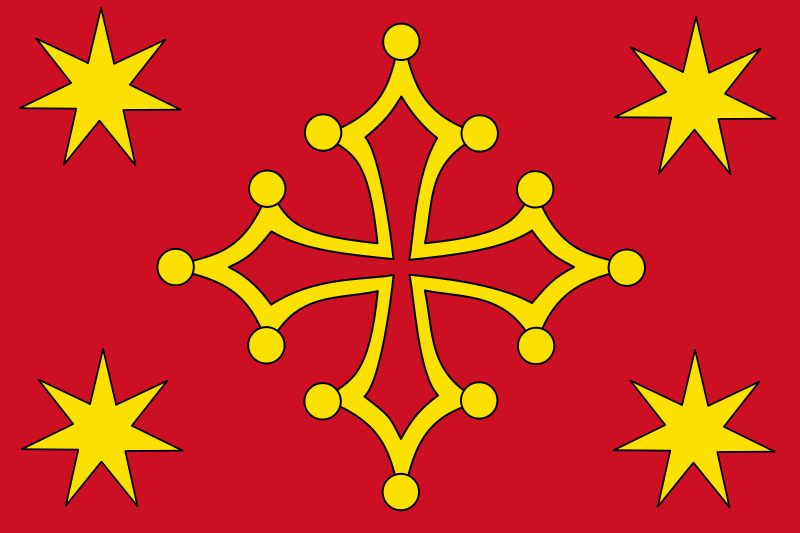
3. The Félibrige and Frédéric Mistral
The Bournat of Périgord is part of a broader historical context. The Félibrige traces its founding to May 21, 1854; according to its own tradition, seven Provençal poets gathered on that day in Font-Ségugne, near Châteauneuf-de-Gadagne. Frédéric Mistral was one of its leading figures. The movement sought to establish a literary place for the Occitan language and to encourage its transmission. The Félibrige, a movement founded in Provence, should not be confused with the Bournat, its Périgord-based Félibrige school: while the two are linked by a cultural lineage, they are distinct organizations.
Mistral publishes Mirèio in 1859, and then worked on a Provençal-French dictionary that was published from 1878 to 1886 under the title The Treasure of Felibrige. In 1904, he was awarded the Nobel Prize in Literature jointly with the Spanish writer José Echegaray. These facts are documented by the Félibrige website. In the Félibrée, the tribute to Mistral recalls this history; it does not imply that the dialects of the Périgord are identical to the Provençal in which he wrote.
4. A celebration planned all year long
The program varies depending on the municipality and the teams organizing it. It often features streets decorated with paper flowers made in advance, music and dance groups, demonstrations of traditional crafts, speeches or songs in Occitan, and local specialties shared with the public.
The traditional procedure described by the CIRDOC – Occitan Institute of Culture includes a welcome ceremony for the Félibres and the symbolic presentation of the keys to the city, a parade, a tribute to a local figure, and then the Taulada, the group meal. The Court of Love is a performance featuring songs, poetry, and dance that draws on the fin’amor, the ideal of chivalry associated with the troubadours. The Mass or ceremony in Occitan, as well as the dances and other activities, depend on the program for each year.
These gestures lend continuity to the ritual, but it would be misleading to claim that every detail has unfolded exactly the same way since 1903. Historical sources document variations over the years; contemporary descriptions reflect the program and the meaning that the organizers wish to convey today.

5. A Few Verified Occitan Expressions
Spelling and pronunciation vary depending on the dialect. These examples, therefore, do not claim to represent the entire Périgord region:
- òc : “yes,” the word that gives the Occitan language its name.
- What is that? : “What is that?” A common expression in the Occitan-speaking region; it is not unique to the Périgord dialect.
- Let's get this party started! : literally “come on in,” a welcoming phrase often rendered as “come on in!” It is particularly associated with the Limousin dialect, spoken in northern Dordogne. The city of Limoges presents it as a welcoming expression in Limousin Occitan.
You might hear these words at the Félibrée, but learning them through a workshop, an organization, or from a native speaker helps you understand their pronunciation, context, and regional variations.
6. A History of Publishing, Not Just an Anniversary
The timeline below distinguishes between the first festival, calendar anniversaries, and edition numbers. It is based on local documents, information from organizers, and data from tourism organizations:
- 1901 — founding of Lo Bornat from the Périgord, two years before the first Félibrée.
- September 20, 1903 — the first Félibrée in Mareuil-sur-Belle, presided over by Camille Chabaneau.
- 2019 — Périgueux is hosting the 100e edition, on July 5, 6, and 7. One hundred editions do not mean one hundred years: the calendar centennial of the first festival was in 2003.
- 2022 — the 101e edition is held in Eymet.
- 2023 — " Montignac-Lascaux " receives the 102e edition.
- 2024 — Tocane-Saint-Apre hosts the 103e Félibrée.
- 2025 — Sarlat-la-Canéda is hosting the 104e edition.
- 2026 — Abjat-sur-Bandiat hosts the 105e edition.
To explore these venues and posters in greater historical depth, the anthology 100 Félibrées in Périgord, 1903–2019, co-published with Lo Bornat dau Perigòrd and the Historical and Archaeological Society of Périgord, is a useful bibliographic reference.
7. A language passed down through customs
The vitality of a language is not measured solely by the number of people who speak it on a daily basis. It also depends on families, organizations, classes, memory-gathering initiatives, songs, and the places where it is heard. A survey commissioned by the Public Office for the Occitan Language interviewed 8,000 people across several regions. For the Périgord-Limousin region, the Park cites 92 interviews: 20% of those surveyed there are classified as speakers and 57% as “Occitan-influenced”—they understand the language without speaking it. These figures describe the scope of this survey, not the entire Dordogne department.
Visit Park Resources provide access to Occitan classes, workshops, and cafés, as well as content on the language and local stories. The Departmental Archives They also preserve and promote oral history collections as part of the “Mémoire(s) de demain” project. This makes it possible to encounter Occitan in a workshop or recording without having to claim to speak it fluently in order to take an interest in it.
8. Where to Continue Your Exploration
The Félibrée makes you want to continue exploring the towns and meeting local stakeholders. Here are a few suggestions on Périgord.com:


Le Bournat in Le Bugue
A park dedicated to life and traditional crafts of days gone by. Parc Le Bournat is a heritage site separate from the Lo Bornat dau Perigòrd association, even though both names share the same Occitan origin.
Cultural Events
Discover the events, shows, and gatherings that shape local life in the Dordogne.
The Villages of the Périgord
Extend your getaway through the villages and landscapes where the language, place names, and local stories have taken root.
Sources and Resources
- The Félibrige: Founding, Frédéric Mistral, and Biographical Highlights.
- The Félibrige: A History of the Félibrée of the Périgord.
- Lo Bornat dau Perigòrd: Introduction to the Association.
- CIRDOC – Occitan Institute of Culture: The Félibrée Festival and Its Traditions.
- Périgord-Limousin Regional Nature Park: Language, Resources, and the OPLO Survey.
- “Areas Where the Occitan Language Is Used in Périgord”: A Study of Varieties and Uses.
- City of Limoges: Limousin expression “Chabatz d’entrar”.
- Dordogne Périgord Tourism: Detailed Program for the 2024 Edition.
- Map of the 100e Félibrée in Périgueux, 2019; Montignac-Lascaux 's document on Route 102e edition, 2023.
- Official Program for the 104the Félibrée, Sarlat 2025; Abjat Félibrée 2026 website.
- Departmental Archives: “Memories of Tomorrow” Collection.